- Consult
- Records
- Bond
- Adjust
- Debond
- Retain
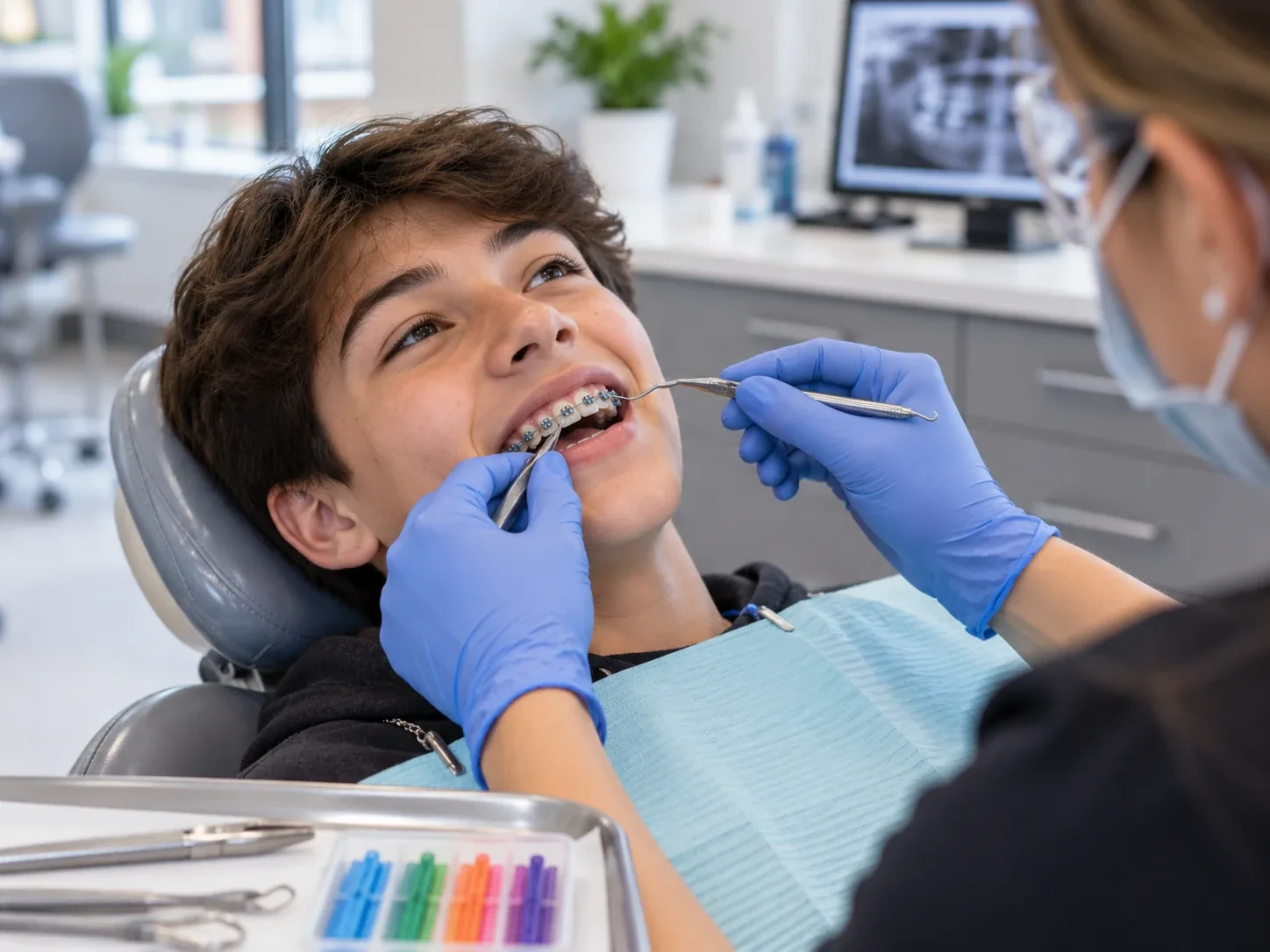
Most of the journey lives at 'Adjust' — here’s what each stretch of it feels like.
visible movement by months 2–4, the “wow” phase around months 4–8, a long fine-tuning middle, elastics for bite work in the later half, and detailing at the end. Typical total: 18–24 months.
Day 1: bond day
About 90 minutes, no needles, no pain — brackets glued on, first wire in. Strange-feeling, not sore. Full walkthrough: getting braces on.
Week 1: the adjustment week
Days 2–4 are the sore ones — pressure-tender teeth, cheeks learning the hardware. Soft foods, orthodontic wax, standard pain relief. By day 7 it’s background noise.
Months 1–4: alignment magic
The flexible first wires unravel crowding fastest, so this is when friends start noticing. Adjustments every 6–8 weeks step up wire sizes; each visit brings 1–3 mildly tender days.
Months 4–12: the working middle
Progress turns internal — root positions, arch coordination, bite levelling. It can look slow while the important work happens. This is also when elastics usually start for bite correction: they only work when worn, so this stretch rewards consistency more than any other.
Months 12–20: bite correction & detailing
Heavier wires, precise bends, sometimes small refinements you can’t see but your bite can feel. The specialist is now working in fractions of millimetres.
The final months: almost there
When we say “two or three more visits,” retainer planning begins. Then comes debond day — and the retention routine that keeps everything you just earned.
What stretches the timeline
Broken brackets (each one costs weeks — see the food rules), skipped elastics, and missed appointments. What shortens it: doing exactly those three things right.
How it works at our practice
At our clinic the rhythm is an adjustment every six to eight weeks, held after school or on Saturdays for school-age patients. We tell you at each visit where you are on the wire and what the next stage is for, and we'll say plainly when unworn elastics or breakages are slowing things — because the fee doesn't change if treatment runs long, but your time does.
Frequently asked questions
When will I see results from braces?
Visible alignment by months two to four; the 'wow' stretch is months four to eight; the bite work is internal and slower.
Why does the middle of treatment feel slow?
Because root positions and bite levelling are invisible from the front. The important work is happening.
What stretches the timeline?
Broken brackets, skipped elastics, missed appointments. What shortens it: the opposite.
How do I know when I'm nearly done?
When we say 'two or three more visits' and start talking about retainers.
Related reading
- How long braces take — the ranges
- Elastics — the second-half variable
- Debond day — the finish
The bottom line
Alignment first, bite work in the middle, detailing at the end — eighteen to twenty-four months for most comprehensive cases. What you control at home decides which end of the range you finish at.
If it were our own family
We'd mark the six-week adjustments on the family calendar, aim the sore days at weekends, and remind our teenagers at month nine — the slow-looking middle — that the important work is invisible from the front.
What people also search for
“Braces progress month by month”
Visible alignment by months two to four, bite work in the middle, detailing at the end.
“When do braces start working?”
Immediately — the first wire begins moving teeth within days; you see it within weeks.
“Braces 6 months progress”
Usually well-aligned front teeth and the beginning of bite correction.
The bottom line
Alignment first, bite work in the middle, detailing at the end. Eighteen to twenty-four months for most comprehensive cases, and the patient decides which end of the range.
Sources & references
General clinical guidance on this page is consistent with the professional and public-health bodies below. Practice-specific statements — fees, inclusions, appliances offered, protocols — come from myORTHODONTIST Coquitlam and are listed in our provider & service verification register. This page is general information and not a substitute for an examination.
- American Association of Orthodontists — Professional association (US)
- myORTHODONTIST Coquitlam — practice protocols — Treating practice (fees, protocols, inclusions)
Written and reviewed by the certified specialists at myORTHODONTIST Coquitlam. Last reviewed: September 2026. General information, not a substitute for an examination. How our claims are verified →