- Consult
- Records
- Bond
- Adjust
- Debond
- Retain
by 7, the first adult molars and incisors are in — enough to read the bite, spot crossbites, crowding trajectories, off-path canines and airway flags while growth still offers easy options. Most kids need nothing but a free recall schedule.
What exists at 7 that didn’t at 5
The first adult molars establish the back bite’s foundation, and the adult front teeth reveal how much room the arch really has. With those landmarks, a specialist can project where the bite is heading — readable years before it’s obvious in the mirror.
What’s catchable at 7 that’s harder at 12
- Crossbites with a jaw shift — redirected easily during growth; entrenched by the teens.
- Narrow palates — expansion works best while growth sutures are open.
- Off-path canines — one X-ray can prevent impaction with a minimal, well-timed move.
- Habits & airway flags — thumb-sucking, mouth breathing and tongue posture reshape growth most in these years, and respond best to early attention.
What the visit is — and isn’t
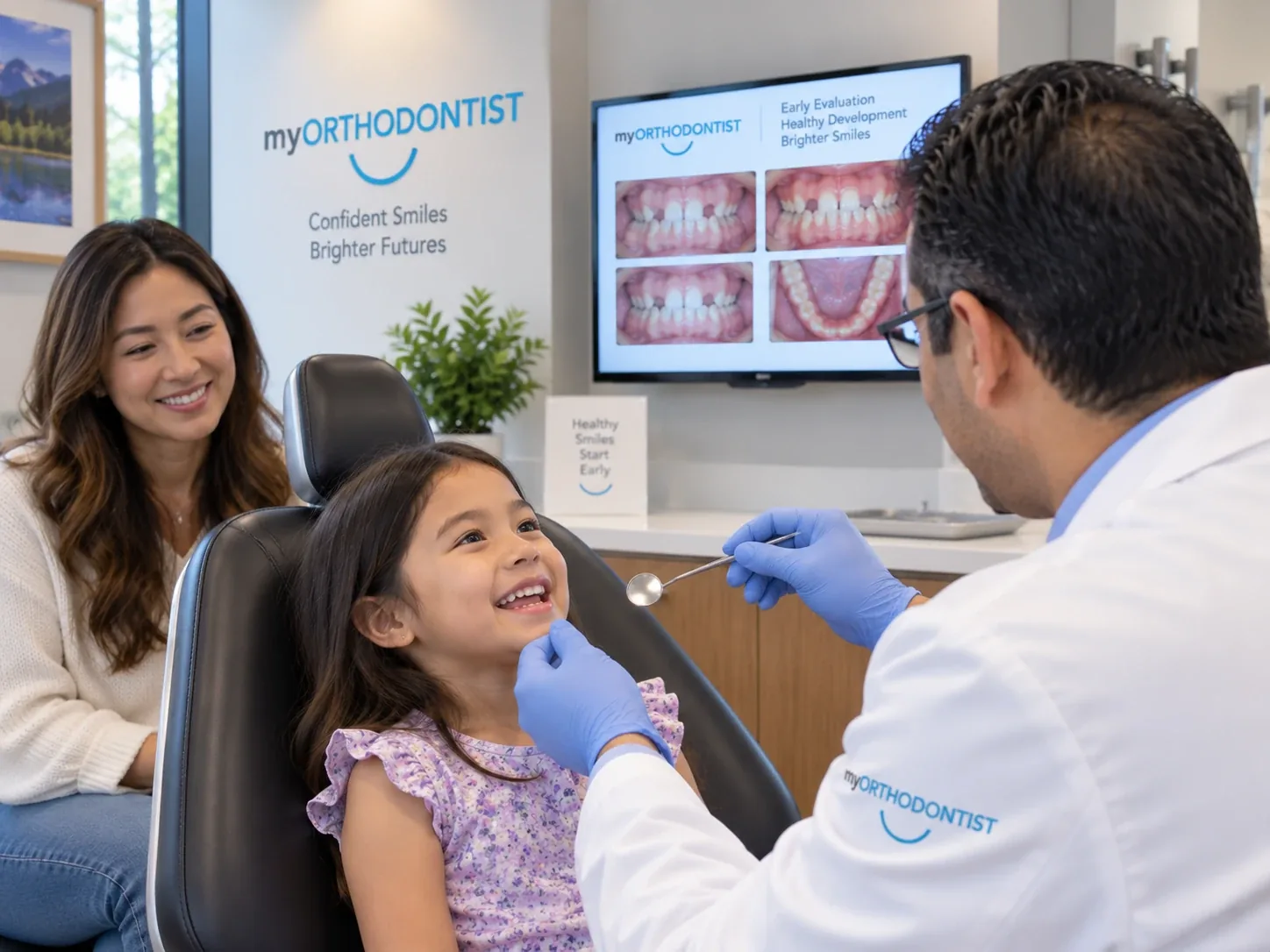
Thirty to forty-five minutes: a look, usually a panoramic X-ray, and a plain-language verdict. The most common outcome by far is “everything’s developing fine — see you in twelve months,” on a free monitoring recall until the ideal start time (usually 11–13, if ever). The check exists to find the minority who genuinely benefit from early treatment — and to give everyone else timing, for free. At our clinic the assessment costs nothing, which makes “just get it checked at 7” one of parenting’s easier calls.
How it works at our practice
A seven-year-old's visit at our clinic is short, free, and usually reassuring: a look, a panoramic X-ray, an airway screen and a plain verdict. Most children leave with a recall date and a sticker; the minority with a skeletal pattern get the reason shown on the X-ray and a first phase that names what it prevents.
Frequently asked questions
Is 7 too young for an orthodontist?
No — it's when the growth story becomes readable. It's rarely too early; it's sometimes too late.
Does the age-7 visit cost anything?
No, and neither do the monitoring visits that usually follow.
Will there be X-rays?
A panoramic X-ray — quick, low-dose, and the only way to see the unerupted teeth.
What if my child is already 10?
Book now. Most windows are still open at ten, fewer at twelve.
Related reading
- Children's orthodontics — the hub
- Braces for kids — what they actually get
- 10 signs — what to watch for at home
The bottom line
Seven is when a specialist can read where a bite is heading and still guide it. The visit is free, short, usually reassuring — and for the minority with a skeletal pattern, it opens a window that closes by twelve.
If it were our own family
We'd book the look at seven, expect a recall date, and be quietly relieved — knowing that the one time in five it's something else, we'd have caught it years early.
What people also search for
“First orthodontist visit age”
Around seven, when adult molars and incisors have arrived and the growth story is readable.
“What happens at a child's first orthodontist appointment?”
A look, a panoramic X-ray, an airway screen and a plain verdict — free.
“Is 9 too late for an orthodontist?”
No — most windows are open at nine; fewer at twelve.
The bottom line
Seven is when a specialist can read where a bite is heading and still guide it. Free, short, usually reassuring.
Sources & references
General clinical guidance on this page is consistent with the professional and public-health bodies below. Practice-specific statements — fees, inclusions, appliances offered, protocols — come from myORTHODONTIST Coquitlam and are listed in our provider & service verification register. This page is general information and not a substitute for an examination.
- Canadian Association of Orthodontists — Professional association (Canada)
- American Association of Orthodontists — Professional association (US)
Written and reviewed by the certified specialists at myORTHODONTIST Coquitlam. Last reviewed: September 2026. General information, not a substitute for an examination. How our claims are verified →