- Consult
- Records
- Bond
- Adjust
- Debond
- Retain
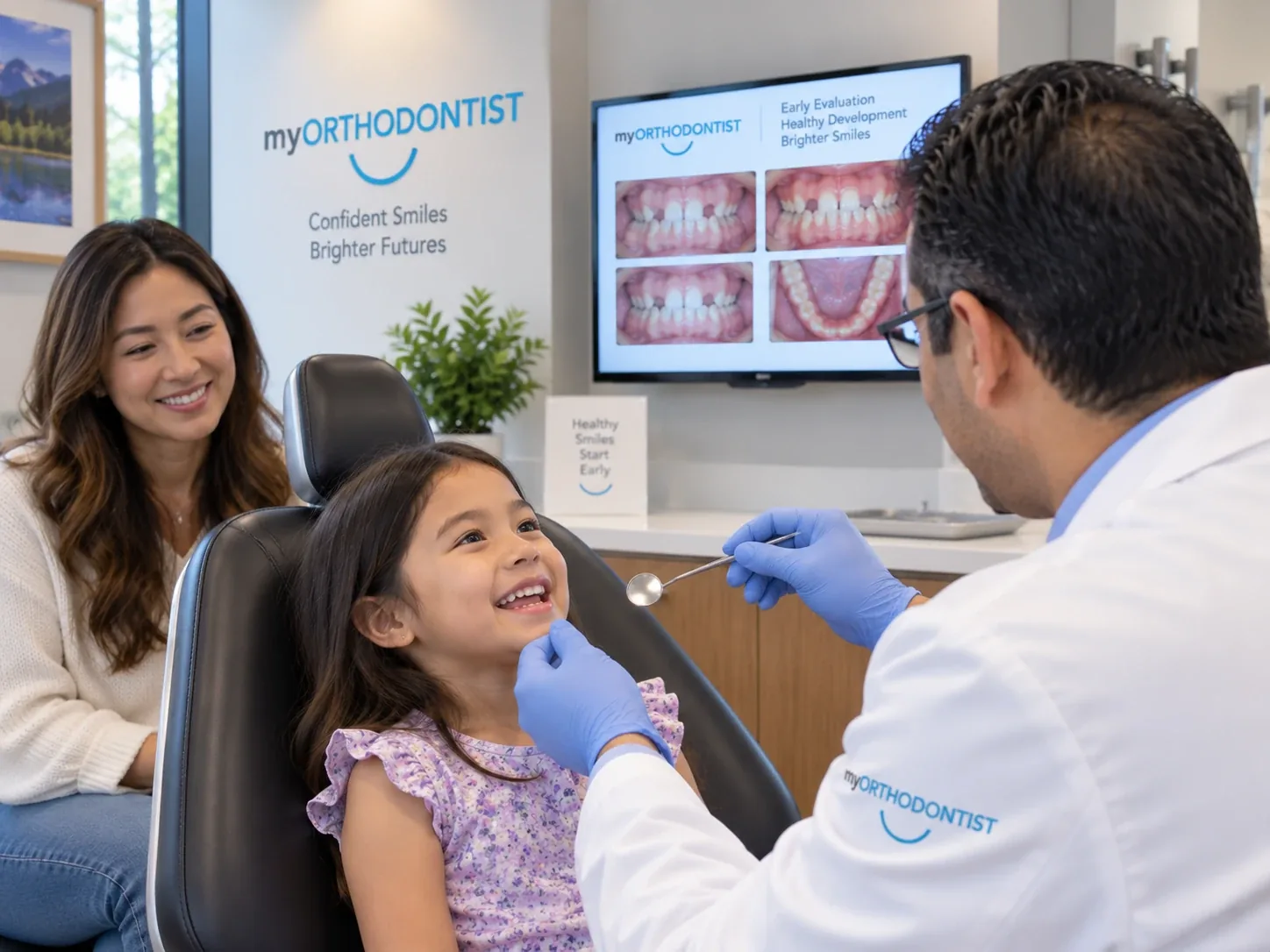
All ten signs point to the same first step: a free assessment around age 7.
- Crowded or overlapping teeth. Adult teeth erupting twisted or squeezed means the arch is short on room — the most common reason for treatment.
- Very early or very late loss of baby teeth. Either can throw off the eruption sequence and let neighbouring teeth drift into the wrong spaces.
- Front teeth that stick out. Prominent upper teeth look charming and chip easily — playground trauma risk is a genuine reason for earlier treatment.
- A crossbite. Upper teeth biting inside the lowers, especially on one side, can steer the growing jaw off-centre — one of the clearest cases for truly early treatment.
- An underbite. Lower teeth in front of the uppers is a jaw-relationship pattern that’s far easier to guide during growth than to correct after it.
- Mouth breathing, snoring or restless sleep. Airway and jaw development are linked; these signs deserve airway-aware screening, not just a tooth check.
- Thumb-sucking past age 5–6. Persistent sucking habits reshape the bite and often create open bites that don’t self-correct.
- Difficulty chewing or biting. If your child avoids certain foods or chews oddly, the bite may not be meeting properly.
- Jaws that shift or click. Visible sideways shifts on closing suggest the bite is forcing the jaw around it.
- Speech quirks that persist. Some sounds depend on tooth position; lisps that outlast speech development can have a dental component.
When to book the check
Around age 7 — or now, if you’re seeing signs 3, 4, 5 or 6. The assessment at our clinic is free, and the most common outcome is reassurance plus a monitoring recall. The full picture of what early treatment can and can’t do is in our children’s orthodontics guide.
How it works at our practice
Any of these signs is a reason to book the free assessment; signs three through six are reasons not to wait for the next dental checkup. We'll show you on the X-ray which pattern we see, name what early treatment would prevent if it's indicated, and give you a free recall date if it isn't.
Frequently asked questions
Which sign is most urgent?
A crossbite that shifts the jaw, and an emerging underbite — both easy early and hard late.
My child has crooked baby teeth — is that a sign?
Not on its own; baby teeth are meant to have gaps and the adult teeth often arrive straighter. The assessment sorts it.
Should I wait for all the adult teeth?
For the skeletal signs, no — several windows close by twelve. For mild crowding, waiting is usually fine.
What does the assessment cost?
Nothing, including the X-ray and the monitoring visits that usually follow.
Related reading
- Why age 7 — the timing
- Children's orthodontics — what early treatment does
- Braces for kids — what children actually get
The bottom line
Ten signs, one first step: a free assessment around age seven. Most children get reassurance and a recall date; the ones with a skeletal pattern get caught while it's still easy.
If it were our own family
We'd watch for a jaw shift on closing and an emerging underbite — and book the free look for everything else without worry, because most of it needs a recall date and nothing more.
What people also search for
“Does my child need braces quiz”
No quiz replaces a look at the jaws on an X-ray. The assessment is free.
“Crooked baby teeth”
Usually normal; adult teeth often arrive straighter. Worth a look at seven regardless.
“Signs of overbite in child”
Prominent upper front teeth, a receding chin, lips that don't meet easily.
The bottom line
Ten signs, one first step: a free assessment around seven. Most children get reassurance; the ones with a skeletal pattern get caught early.
Sources & references
General clinical guidance on this page is consistent with the professional and public-health bodies below. Practice-specific statements — fees, inclusions, appliances offered, protocols — come from myORTHODONTIST Coquitlam and are listed in our provider & service verification register. This page is general information and not a substitute for an examination.
- Canadian Association of Orthodontists — Professional association (Canada)
- American Association of Orthodontists — Professional association (US)
Written and reviewed by the certified specialists at myORTHODONTIST Coquitlam. Last reviewed: September 2026. General information, not a substitute for an examination. How our claims are verified →