- Consult
- Records
- Bond
- Adjust
- Debond
- Retain
there is no upper age limit. The prerequisites are healthy gums and stable dental work, not a birth year. Seniors commonly choose aligners or ceramic braces; timelines match younger adults for equivalent cases, and treatment often serves dental health as much as appearance.
Why seniors are in the chair
- Lifetime drift finally annoying enough — the lower front crowding that crept in over decades.
- Teamwork with the dentist — uprighting tilted teeth and opening space so implants, crowns or partials fit properly; often the difference between a compromise and an ideal restoration.
- Health and cleanability — straighter teeth are easier to keep for life, which matters more, not less, at 70.
- Finally, the smile — retirement is a perfectly good time to want it. Plenty do.
What’s genuinely different after 60
Bone remodelling runs slightly slower but works fine; the real gatekeeper is gum health — periodontal screening comes first, and active gum disease gets treated before teeth move. Existing bridges, implants and crowns get planned around (implants don’t move — a fact specialists design with, not against). Dry-mouth medications make the hygiene routine more important. None of these are barriers; all of them are reasons the planning belongs with a specialist coordinating with your dentist.
The senior-friendly menu
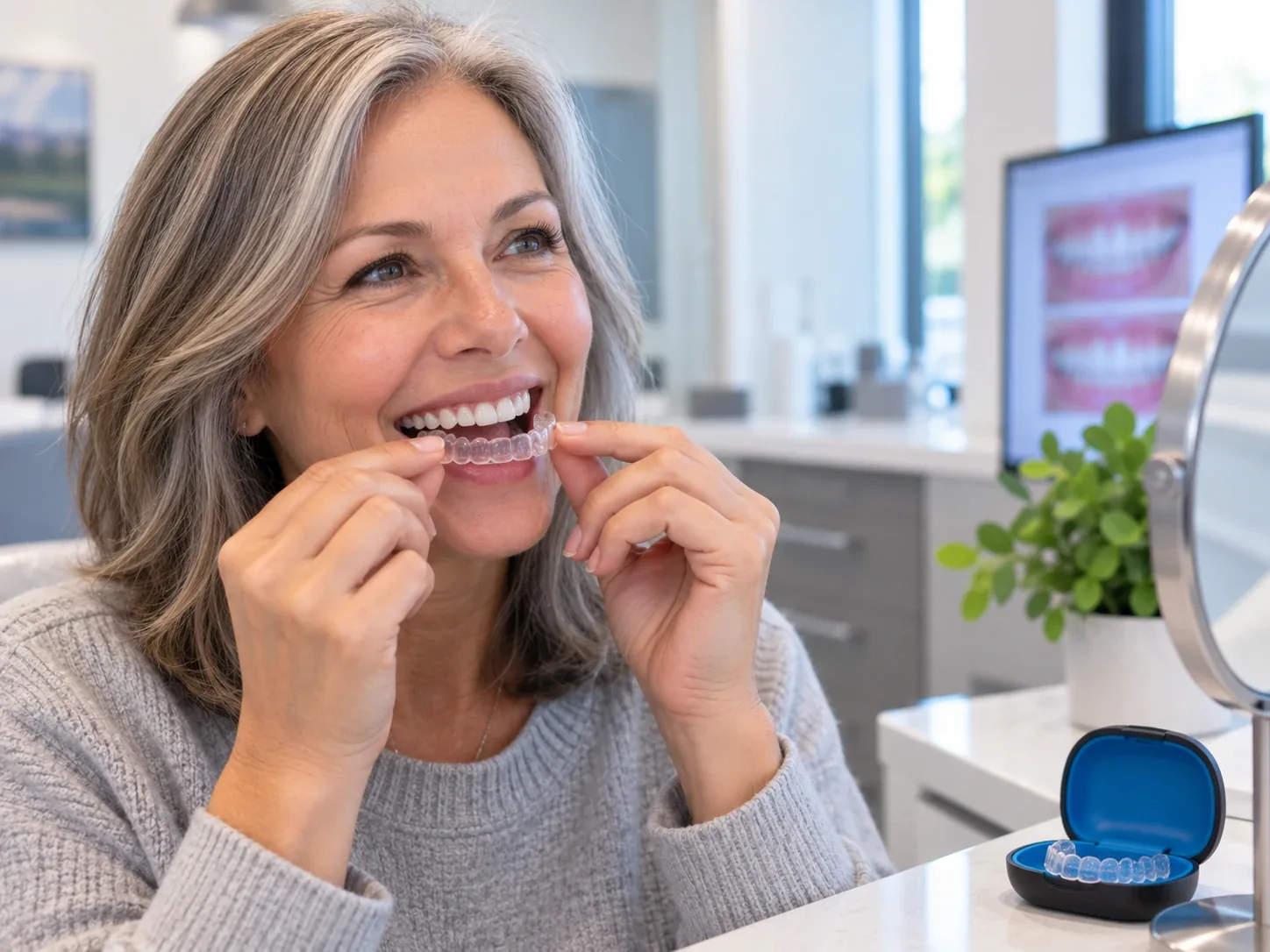
Aligners suit most senior cases beautifully — removable for cleaning, gentle, invisible (and seniors are famously the best wear-time compliers in the building). Ceramic braces cover the complex cases discreetly. Costs follow case, not age (the guide) — and the consultation that answers everything is free, whether you’re 16 or 76.
How it works at our practice
We treat patients in their sixties and seventies regularly, usually with aligners, often in coordination with a dentist planning implants or crowns. The sequence is gum health first, then the plan designed around existing dental work, then treatment at the same pace as anyone's. Seniors are, without exaggeration, our most compliant patients.
Frequently asked questions
Is there an age limit for braces?
No. Healthy gums and stable dental work are the prerequisites.
Do teeth move slower after 60?
Slightly. Timelines match younger adults for equivalent cases, give or take a couple of months.
Can I get Invisalign with a partial denture?
Often — we plan around it and coordinate with your dentist.
Is it worth it at my age?
Cleanability, function and a bite that doesn't wear are health reasons at any age. Wanting it is reason enough.
Related reading
- Adult orthodontics — everything that's different
- Adult braces — the options
- Adult cost — and adult insurance, honestly
The bottom line
Healthy teeth move at seventy. Gums first, dental work planned around, aligners or ceramic braces, and the same free consultation as anyone's. The age question is retired.
If it were our own family
Gums checked first, the plan built around the partial denture and the crowns, aligners at night without fuss. We've treated our own patients' parents, and it goes exactly like that.
What people also search for
“Braces at 65”
Yes; healthy gums are the prerequisite, not age.
“Invisalign for seniors”
Usually the right tool — gentle, removable for cleaning, and seniors are excellent compliers.
“Orthodontics with dentures”
Often possible around a partial; we coordinate with your dentist.
The bottom line
Healthy teeth move at seventy. Gums first, dental work planned around, the same free consultation as anyone's.
Sources & references
General clinical guidance on this page is consistent with the professional and public-health bodies below. Practice-specific statements — fees, inclusions, appliances offered, protocols — come from myORTHODONTIST Coquitlam and are listed in our provider & service verification register. This page is general information and not a substitute for an examination.
- Canadian Association of Orthodontists — Professional association (Canada)
- American Association of Orthodontists — Professional association (US)
Written and reviewed by the certified specialists at myORTHODONTIST Coquitlam. Last reviewed: September 2026. General information, not a substitute for an examination. How our claims are verified →