- Consult
- Records
- Bond
- Adjust
- Debond
- Retain
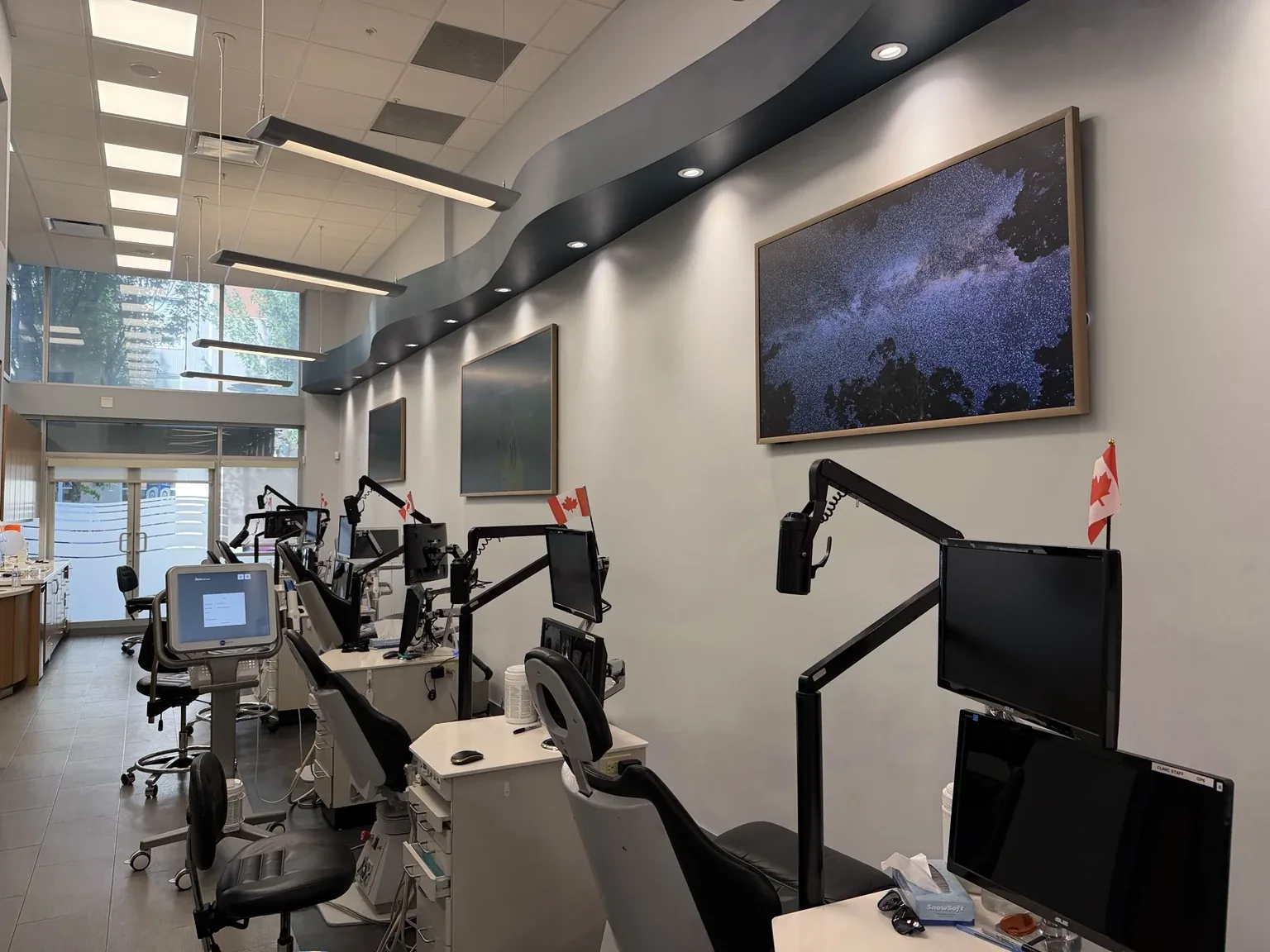
Records — where the scanner, the imaging and the photographs do their work.
iTero digital scanners replace impression trays with a five-minute scan and produce the model every plan is built on. CBCT 3D imaging shows roots, unerupted teeth, jaw joints and airway in three dimensions when a case needs it. A soft-tissue laser handles minor gum contouring and exposures in minutes, in the chair. Digital photography documents every stage. AI analysis assists the specialist's reading of the records. None of it replaces judgement; all of it makes judgement better informed.
iTero digital scanning
No impression material, no gagging, no waiting for a lab model. The scan takes a few minutes, shows you your own teeth on screen immediately, and — for aligner cases — generates the simulation you see before committing. Retainer scans at debond come from the same scanner, which is how Vivera retainers fit so precisely.
CBCT 3D imaging
A low-dose 3D image used when a two-dimensional X-ray isn't enough: locating an impacted canine and its relationship to neighbouring roots, assessing jaw joints, measuring airway dimensions in an airway-aware assessment, planning bone-anchored or surgical cases. We use it when it changes the plan, not routinely.
Soft-tissue laser
Minor gum contouring at debond to even up a gum line, freeing a tooth that's struggling to erupt through thick tissue, a quick frenum release before a gap is closed — done in minutes in our chair, with minimal discomfort and fast healing, instead of a referral and a separate appointment.
Digital photography and AI analysis
Standardised photographs at every stage document progress and support the plan. AI-assisted analysis helps flag patterns in the records — arch dimensions, symmetry, growth indicators — for the specialist to weigh. The decision remains the orthodontist's; the software makes sure nothing is missed on the way to it.
Frequently asked questions
Do I still need impressions?
No — the iTero scan replaces them.
Is CBCT safe for children?
It's low-dose and used only when it changes the plan — for example, locating an impacted canine.
Does technology make treatment faster?
It makes planning better and appointments more comfortable. Teeth still move at biology's pace.
Related reading
- How we practise
- Vivera retainers — made from the scan
- How teeth move — the part technology can't change
Sources & references
General clinical guidance on this page is consistent with the professional and public-health bodies below. Practice-specific statements — fees, inclusions, appliances offered, protocols — come from myORTHODONTIST Coquitlam and are listed in our provider & service verification register. This page is general information and not a substitute for an examination.
- Align Technology (Invisalign, Vivera) — Manufacturer — product-specific claims only
- myORTHODONTIST Coquitlam — practice protocols — Treating practice (fees, protocols, inclusions)
Written and reviewed by the certified specialists at myORTHODONTIST Coquitlam. Last reviewed: September 2026. General information, not a substitute for an examination. How our claims are verified →