- Consult
- Records
- Bond
- Adjust
- Debond
- Retain
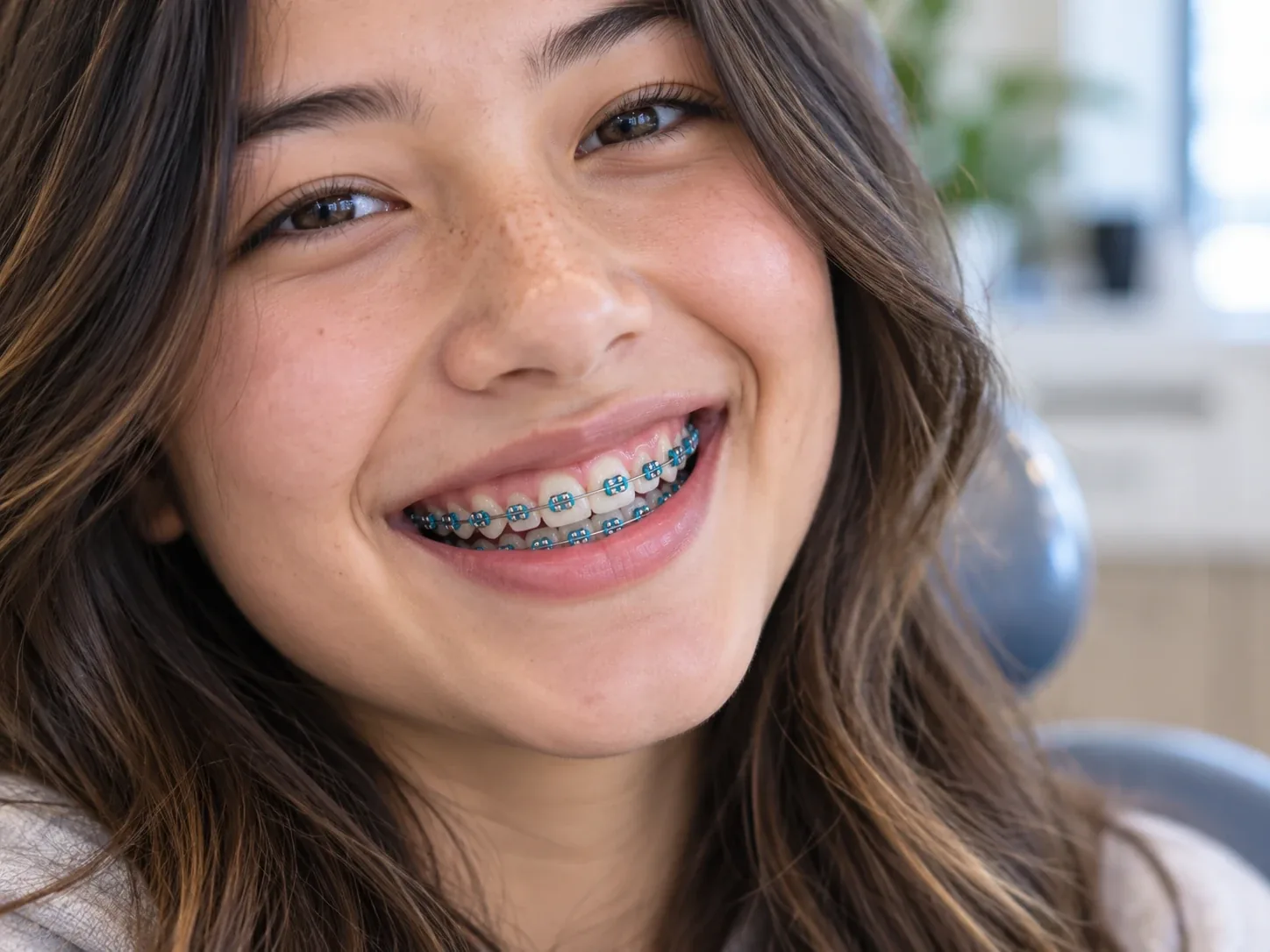
modern metal braces are small, efficient and the best-value comprehensive option — typically $6,000–$8,500 in Coquitlam. They handle every case type, never depend on compliance, and carry the full colour menu.
Not your childhood braces
Brackets are dramatically smaller and smoother, wires are heat-activated alloys delivering lighter continuous forces, and bonding replaced the full metal bands of the past. Visits are quicker, gaps between them longer (6–8 weeks), and comfort is a different sport than the 1990s version.
Where metal wins
- Every case type — complex bites, big rotations, extraction cases: full three-dimensional control.
- Compliance-proof — bonded on, working 24/7, no wear-time to remember. For many teens, the deciding factor.
- Durability & value — toughest brackets, lowest comprehensive price.
- Colours — the whole elastic rainbow, refreshed free at every visit.
The honest trade-offs
They’re visible, the food rules apply, and cleaning takes the extra minute. Image-conscious teens and adults close the aesthetic gap with ceramic brackets or Invisalign — the free consultation puts real numbers on all three for your case.
How it works at our practice
Metal is the appliance we fit most. Bonding takes about ninety minutes; adjustments every six to eight weeks take fifteen to twenty-five; colours are chosen at every visit; the fee includes every visit, repairs, debond and your retainers. For image-conscious patients we'll price ceramic on the upper front teeth beside the metal quote — most choose the mix.
Frequently asked questions
Are metal braces cheaper than ceramic?
Yes — ceramic adds $300–$800 for a full case, less if only the upper front teeth are ceramic.
Do metal braces work faster?
For the same case, metal and ceramic run the same mechanics; metal brackets are slightly stronger and rarely break, which avoids the pauses breakages cause.
Can I have clear ties on metal braces?
Yes — clear or tooth-coloured ties soften the look, though they stain more than coloured ones.
Are metal braces bigger than they used to be?
A fraction of the size. Modern brackets are low-profile and smooth; the big bands of the 1990s are gone.
Related reading
- Ceramic braces — the discreet alternative
- Colours — the fun part
- Cost — what the fee includes
The bottom line
Smallest they've ever been, strongest, best value, compliance-proof for teenagers, and the canvas for colours. If a case needs braces and discretion isn't the top priority, metal is the honest recommendation — and we'll price the ceramic mix beside it so the choice is yours.
If it were our own family
Metal for our own teenagers, with colours, and ceramic uppers only if they asked. It's the appliance that works while a fifteen-year-old is asleep, at practice and mid-exam, and the one whose brackets rarely break.
What people also search for
“Silver braces” — are they the same as metal?
Yes. Stainless-steel brackets, sometimes called silver or traditional braces.
“Metal braces vs ceramic cost”
Ceramic adds $300–$800 for a full case; $200–$400 for the upper front teeth only.
“Do metal braces stain teeth?”
No. Stains come from plaque left around brackets, not from the metal. Brushing prevents them.
The bottom line
The most capable, reliable and economical appliance we fit, and the one that carries colours. If discretion isn't the top priority, metal is the honest recommendation.
Sources & references
General clinical guidance on this page is consistent with the professional and public-health bodies below. Practice-specific statements — fees, inclusions, appliances offered, protocols — come from myORTHODONTIST Coquitlam and are listed in our provider & service verification register. This page is general information and not a substitute for an examination.
- Canadian Association of Orthodontists — Professional association (Canada)
- American Association of Orthodontists — Professional association (US)
Written and reviewed by the certified specialists at myORTHODONTIST Coquitlam. Last reviewed: September 2026. General information, not a substitute for an examination. How our claims are verified →